L'IRG CHANGE DE CAP
La feuille de route de l'IRG s'est renouvelée. Découvrez son nouveau projet sur www.institut-gouvernance.org.
Point de vue
>> Toutes les vidéos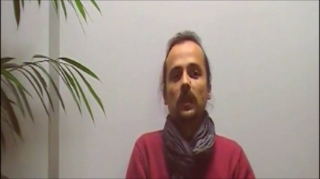
Les billets gouvernance de notre réseau
- Un grand débat national en France : oui mais avec quelles méthodes ? Blog de Pierre Calame
- Méditerranée : 30 voix pour bâtir un avenir commun IPEMED
 Coredem

Participation à d’autres ouvrages
-
The Legitimacy of the State in Fragile Situations
Report for the OECD DAC International Network on Conflict and FragilitySéverine Bellina, Institute for Research and Debate on Governance – IRG
Dominique Darbon, Africa Study Center – SciencesPo Bordeaux, CEAN
Stein Sundstøl Eriksen, Norwegian Institute of International Affairs – NUPI
Ole Jacob Sending, Norwegian Institute of International Affairs – NUPI/
Chr. Michelsen Institute – CMILire en ligne : http://www.norad.no/en/Tools+and+pu...
-

Il y a loin de la coupe aux lèvres
Quand l’accès à l’eau devient un enjeu de gouvernanceMohamed Larbi Bouguerra, Khadija Darmame, Moussa Diop
Cet ouvrage s’appuie sur deux études de cas pour dégager les grandes problématiques de gouvernance soulevées par la gestion de l’eau. La première étude porte sur l’installation d’une adduction d’eau « moderne » dans deux villages sénégalais, et sur le fiasco qu’elle engendre-les particularités de la société africaine n’ayant été prises en compte. La seconde étude porte sur l’eau dans la ville d’Amman en Jordanie, où cette problématique ne quitte jamais le paysage politique, le problème étant kafkaïen : alors que 97% de la population est raccordée au réseau, l’eau ne coule dans les canalisations qu’une fois par semaine…
Il y a là un vaste champ pour la solidarité écologique, seule en mesure de préserver la durabilité et donc l’avenir même de nos civilisations.
septembre 2010, 173 p., éditions Charles Léopold Mayer
-
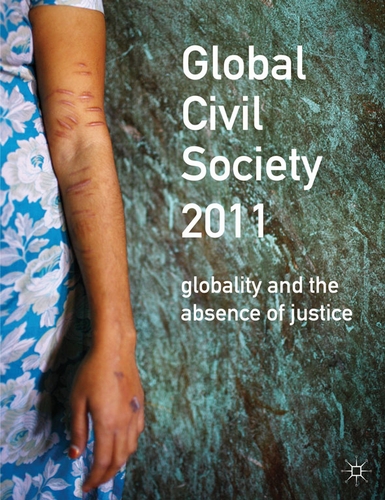
Global Civil Society 2011
Globality and the Absence of JusticeL’IRG a contribué à l’édition 2011 du Global Civil Society Yearbook de la London School of Economics and Political Science par la rédaction de deux articles :
- Séverine Bellina, « A Plural Approach to the Definition of Social Justice », pp. 138-150.
- Martin Vielajus et Nicolas Haeringer, « Transitional Networks of Self-Representation : An Alternative Form of Struggle for Global Justice », pp. 88-101.
Résumé en anglais : Inspired by the globality of justice concerns in the 21st century, Global Civil Society 2011 focuses on how civil society actors around the world are framing, contesting and promoting ideas about justice, as well as their strategies to tackle the myriad injustices people face. It identifies an important shift in the globalisation of concerns about justice – citizens may claim benefits from the nation state, but increasingly groups interacting globally are collectivizing a sense of injustice. In this way global civil society has created and expanded new spaces to reinstall justice as inspiration and arbiter of laws. Combining activist and academic accounts of contemporary struggles, this yearbook provides critical insight into how civil society is remaking justice in a global arena, beyond the confines of the nation state.
Edition Palgrave Macmillan, Description sur le site de l’éditeur